Introduction: The New Age of Competition
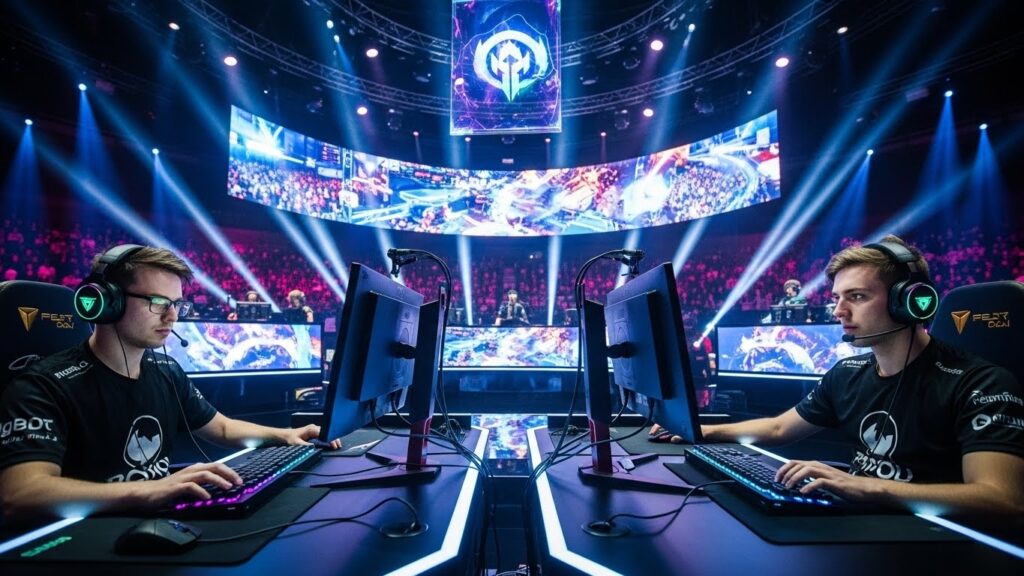
A few decades ago, gaming was considered a hobby for teenagers, a way to pass time after school or escape into fantasy worlds. Fast forward to the twenty-first century, and that same pastime has transformed into one of the fastest-growing global industries: Esports. Today, millions of players train, compete, and earn fortunes through professional gaming. Stadiums fill with roaring crowds, online viewership rivals that of traditional sports, and top players are treated like rockstars. Esports is no longer just “playing games” — it is a culture, a profession, and a global movement.
The Origins of Competitive Gaming
To understand Esports, we must look back to its humble beginnings. Competitive gaming can be traced to the early 1970s, when students at Stanford University competed in “Spacewar!” for a year’s subscription to Rolling Stone magazine. Though modest, this event marked the first step in organized digital competition. The 1980s saw the birth of the arcade scene, where players lined up to dominate leaderboards in classics like Pac-Man, Donkey Kong, and Space Invaders. As technology advanced, so did the players’ ambitions. The release of the Nintendo Entertainment System and later the Sega Genesis made gaming more accessible, and competition became a part of household culture.
The Internet Revolution and LAN Party Culture
The 1990s ushered in a revolution. With the rise of the internet and local area networks (LANs), multiplayer gaming expanded beyond single consoles. Games like Quake, Counter-Strike, and StarCraft allowed players to compete in real-time, connecting continents in virtual battlefields. LAN parties became the social events of the decade — gatherings where players brought their computers to compete, eat pizza, and stay awake for days. These events were more than just gaming sessions; they were the foundation of Esports communities, laying the groundwork for professional tournaments and organized leagues.
From Hobby to Profession: The Early Tournaments
The 2000s marked a pivotal shift. Gaming competitions began offering real money, sponsorships, and professional status. The World Cyber Games (WCG), Major League Gaming (MLG), and Electronic Sports World Cup (ESWC) emerged as global platforms where gamers could prove themselves. South Korea became the epicenter of Esports during this period. Games like StarCraft: Brood War became national obsessions, and players were celebrated like celebrities. Television networks broadcast matches, and training houses were established to nurture rising talent. This model would soon spread worldwide.
The Golden Era: Esports Takes Center Stage
By the 2010s, Esports was no longer underground — it was mainstream. Titles like League of Legends, Dota 2, and Counter-Strike: Global Offensive (CS:GO) led the charge. The League of Legends World Championship, first held in 2011, filled arenas like the Staples Center in Los Angeles and later the Bird’s Nest Stadium in Beijing. Meanwhile, The International, Dota 2’s annual global tournament, shattered prize pool records year after year, crowdfunded by its player base. Esports was officially a spectator sport, with millions watching via streaming platforms like Twitch and YouTube Gaming.
Streaming: The Digital Stadium
One cannot discuss Esports without acknowledging the power of streaming. Platforms such as Twitch transformed gaming from a private activity into a public performance. Anyone could now broadcast their gameplay to audiences around the world, interact with fans in real-time, and build personal brands. This democratization of entertainment gave rise to personalities who blurred the line between athlete and entertainer. Professional players became influencers, and influencers became professional players. The audience grew exponentially — from niche tech enthusiasts to mainstream entertainment consumers.
The Business of Esports
Esports is not just a cultural revolution; it is a multi-billion-dollar industry. Teams are run like sports franchises, complete with managers, coaches, marketing divisions, and sponsorship deals. Major corporations, from technology giants to beverage brands, have invested heavily in Esports marketing. Events are meticulously produced with high-definition broadcasts, commentators, and elaborate stage setups. Prize pools for top tournaments reach tens of millions of dollars, with players earning additional income through sponsorships, streaming, and content creation. In many countries, Esports athletes are now officially recognized as professionals, eligible for visas, taxes, and even scholarships.
The Esports Ecosystem
The Esports ecosystem is vast and interconnected. At its core are the players and teams, but surrounding them are organizations, event organizers, sponsors, game developers, and fans. Developers play a crucial role by creating games that balance skill and entertainment. Publishers like Riot Games, Valve, and Blizzard maintain direct control over their Esports scenes, organizing tournaments and shaping rules. Third-party organizations such as ESL and DreamHack host global competitions across various titles. Meanwhile, fans drive the industry forward — buying merchandise, attending live events, and fueling online communities that give Esports its vibrant culture.
Training, Coaching, and Lifestyle
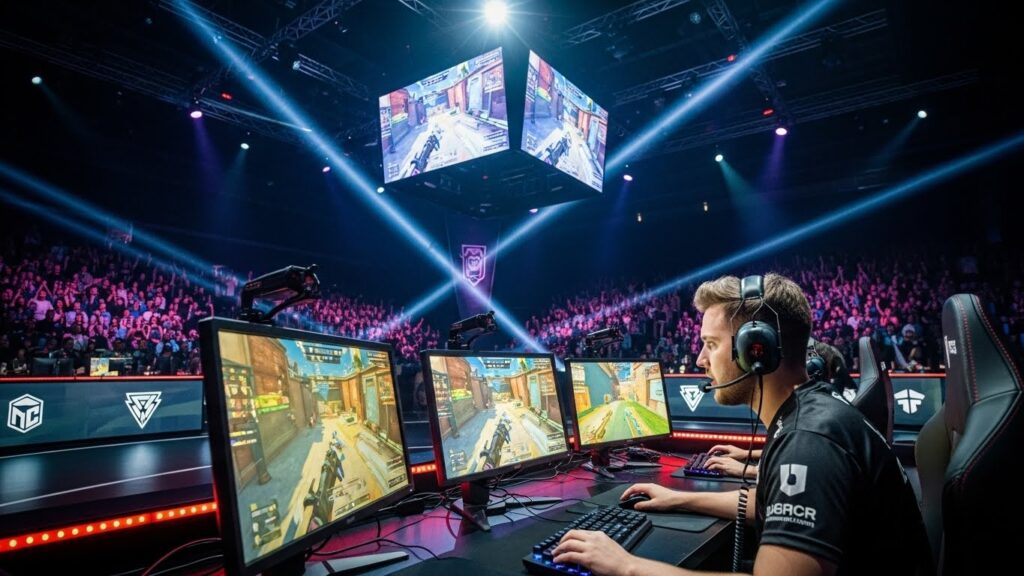
Professional gaming demands more than quick reflexes. Top Esports athletes train for hours each day, honing their mechanics, communication, and strategy. Team synergy is vital, and players often live together in training facilities known as “gaming houses.” These environments include coaches, analysts, nutritionists, and psychologists, all working to optimize performance. The lifestyle is grueling — long hours, high stress, and immense public scrutiny. Mental health awareness has become a growing focus in the Esports world, as players face burnout and pressure at younger ages than traditional athletes.
The Role of Technology and Innovation
Esports thrives on technology. High-refresh-rate monitors, low-latency internet, ergonomic gaming gear, and advanced analytics tools all contribute to elite performance. Artificial intelligence is increasingly being used to analyze player behavior, identify weaknesses, and develop new strategies. Virtual reality and augmented reality also hold potential for future Esports experiences. Moreover, blockchain technology and NFTs have been explored as ways to enhance player ownership and fan engagement, though with mixed reception. The future of Esports will undoubtedly continue to evolve alongside technological innovation.
Diversity and Inclusion in Esports
One of Esports’ greatest challenges and opportunities lies in diversity. Historically, the industry has been male-dominated, but female and nonbinary gamers are rising through the ranks, breaking stereotypes, and gaining recognition. Organizations and initiatives worldwide now advocate for inclusivity, fair representation, and safe online environments. Esports also bridges cultures and geographies. Players from countries like China, Brazil, the United States, and Denmark compete on equal ground, connected by a shared love of gaming. Unlike traditional sports that depend on physical traits, Esports emphasizes mental agility, teamwork, and creativity — making it one of the most globally inclusive arenas.
Esports and Education
Education and Esports are merging in fascinating ways. Universities and high schools around the world now offer Esports scholarships, degrees, and training programs. These programs teach not only gameplay but also event management, broadcasting, marketing, and psychology. Students learn real-world skills such as teamwork, leadership, and communication. In addition, academic research into gaming has expanded, exploring topics such as reaction times, cognitive development, and social dynamics. Esports is proving that gaming can be educational, strategic, and even career-building.
The Cultural Impact of Esports
Esports has influenced fashion, music, entertainment, and even traditional sports. Streetwear brands collaborate with gaming organizations; hip-hop artists sponsor teams or perform at tournaments; and professional athletes invest in Esports franchises. The line between the digital and physical world continues to blur. Esports events often feature concerts, light shows, and cinematic storytelling, transforming them into multimedia spectacles. The culture around gaming — memes, jargon, streaming highlights — permeates social media, shaping online identity for millions of people.
Esports and Traditional Sports: Rivals or Partners?
Traditional sports and Esports have an intriguing relationship. Initially, many sports purists dismissed gaming as a fad. However, the numbers are undeniable. Esports viewership often surpasses that of established leagues like the NHL or MLB. Recognizing this, many sports organizations have embraced Esports rather than competing with it. The NBA has its own Esports league (NBA 2K League), Formula 1 hosts virtual racing competitions, and football clubs from Manchester City to Paris Saint-Germain have official Esports divisions. These collaborations highlight the convergence of two worlds united by competition and fandom.
The Globalization of Esports
Esports is not bound by geography. Internet connectivity has allowed players from any corner of the world to compete at the highest level. Asia remains a dominant force, with South Korea and China leading in infrastructure and talent development. Europe and North America continue to produce powerhouse teams and innovative leagues. Meanwhile, regions like the Middle East, Africa, and South America are emerging markets with immense potential. The global nature of Esports encourages cultural exchange and international collaboration on a scale few industries can match.
Challenges Facing the Esports Industry
Despite its success, Esports faces numerous challenges. Player burnout is one of the most pressing issues, with young athletes retiring early due to stress and overtraining. Regulation is another concern, as there is no unified global authority overseeing Esports competitions, leading to inconsistencies in rules and governance. Cheating, match-fixing, and performance-enhancing software threaten the integrity of competition. Additionally, monetization and sustainability remain complex topics, as teams often struggle to balance sponsorship revenue with operational costs. The industry’s reliance on game publishers also raises questions about creative control and long-term stability.
The Esports Audience: A New Kind of Fan
The Esports audience is unlike any other. Younger, tech-savvy, and globally connected, Esports fans demand interactivity and authenticity. They don’t just watch games — they participate through chats, social media, and fan communities. This creates a two-way relationship between players and viewers, fueled by memes, humor, and direct communication. Esports events are as much about community as they are about competition. Fans identify with their favorite players not just for their skills but for their personalities, streaming content, and shared values.
The Future of Esports
The future of Esports promises both expansion and transformation. As technology continues to advance, new genres of competitive gaming will emerge. Mobile Esports is already taking hold, particularly in regions where console or PC gaming is less accessible. Virtual reality competitions, AI-driven training, and global youth programs will continue to redefine what it means to be a professional gamer. Esports is also poised to integrate more deeply with mainstream entertainment — from Hollywood adaptations to live concert collaborations. If the past decade was about legitimization, the next will be about innovation.
Conclusion: The Power of Play
Esports represents the evolution of human competition in the digital age. What began as casual gaming has become a cultural force that connects people across languages, borders, and backgrounds. It celebrates intelligence, reflexes, creativity, and resilience — traits that mirror the best of traditional sports while embracing the possibilities of the virtual world. Whether one is a player, a fan, or a casual viewer, Esports offers something uniquely modern: the thrill of global connection through play. The games may change, but the spirit of competition — the desire to test skill, push limits, and achieve greatness — remains timeless.